Author: Vinoy Vijayan

  • The Bad Sleep Well: Kurosawa’s revenge tale in a corporate jungle

    The Bad Sleep Well: Kurosawa’s revenge tale in a corporate jungle

    For me, Akira Kurosawa is a lot like Taylor Swift. I haven’t actually experienced much of his art but I sure do know a lot about him: He’s the most famous Japanese director, a legend of cinema, and the creator of some of the most influential samurai films ever made. Rashomon, Seven Samurai, and Yojimbo – I can throw these names around and sound like a half-decent cinephile.

    I also knew about the cultural legacy of his films. Rashomon gave birth to the “Rashomon Effect” (conflicting accounts by different people of the same event) which has been used as a clever plot device in many movies and tv shows. Seven Samurai was the movie that was remade into the classic western The Magnificent Seven, and supposedly inspired an entire genre of “assembling the team” movies (Ocean’s ElevenThe AvengersInception).

    I wonder if he also invented the slow-motion walk scene once the team is in place.

    As a high school student, I was “forced” to watch Ran (a feudal Japan retelling of Shakespeare’s King Lear) on a grainy VHS tape from the 1980s. I knew I was supposed to like Kurosawa but man, was that a snoozefest.

    Fast forward to now, and older me (wiser me?) has decided to revisit Kurosawa and take an alternative path to discovering him: Forget all the famous movies set in feudal Japan with samurais and sexy sword fights. Give me something modern Akira!

    And that’s how I ended up watching The Bad Sleep Well (1960). No samurai, no epic battle scenes. Instead, it’s a revenge story set in post-war Japan’s corporate world.

    The movie is called The Bad Sleep Well in English (TBSW), but a more accurate translation is The Worse You Are, the Better You Sleep (TWYA TBYS). That’s actually a better title because it sets the tone perfectly—dark, cynical, and deeply skeptical of human nature.

    This is not a hopeful movie.

    Shakespeare in a corporate suit

    Beyond samurai movies, Kurosawa is also known for his adaptations of Shakespeare. TWYA TBYS is loosely based on Hamlet (or says Wikipedia). On the surface, the movie is a revenge thriller. The plot revolves around Koichi Nishi, a young executive with a hidden agenda. Nishi infiltrates a corrupt corporation to expose the executives responsible for driving his father to suicide. What follows is a game of cat and mouse, as Nishi slowly turns the screws on his prey while they rush to uncover the mystery of what is going on.

    Japan in the shadows: Post-war corruption

    The world that Kurosawa was depicting is a Japan rebuilding itself, post World-War II, into the economic powerhouse that it is today, but that transformation has come at a price. Corporate greed and bureaucratic corruption are rampant and loyalty to authority is exploited by those in power. It’s a corporate jungle where the powerful crush the weak and sleep soundly at night—hence the title.

    The movie opens with an intricately-crafted wedding scene. This is a scene that has really stuck with me – I guess this is the genius of Kurosawa at work?. It’s here that we’re introduced to executives of a shady construction company, where the subtle gestures and pointed glances hint at secrets bubbling beneath the surface, while reporters looking in on the wedding gossip about the corporation’s shady dealings and perform the role of a classic greek chorus, providing the necessary background on these characters.

    Suddenly, a second wedding cake arrives shaped like the company’s office building, complete with a red rose sticking out of a window which is a reference to the mysterious death of an executive who allegedly “jumped” from that very window many years ago. It’s the first sign that something is afoot – who sent this cake?

    Deference to Authority: Loyalty at All Costs
    Another theme Kurosawa examines is the cultural deference to authority. In Japanese culture, there’s a strong emphasis on respect for hierarchy and obedience to one’s superiors.

    Echoes of this mindset run through Japan’s history, from the infamous kamikaze pilots of World War II to Hiroo Onoda, the soldier who continued fighting in the Philippines for 28 years after the war ended. He refused to believe the war was over until his commanding officer personally told him to stand down in 1974. This kind of unyielding loyalty is deeply embedded in Japan’s collective psyche.

    In the film, this deference becomes a weapon used by the powerful to maintain control. Employees are expected to protect their bosses at all costs, even if it means committing crimes or ruining their own lives. In one scene, a scapegoated employee, under immense pressure, breaks down and essentially sacrifices himself for the company by jumping in front of a bus. It’s not a grand act of heroism or honor—it’s a tragic display of how loyalty can be exploited.

    In The Bad Sleep Well, Kurosawa flips this cultural norm on its head, asking uncomfortable questions: At what point does loyalty become complicity? And is it possible to challenge authority without becoming a victim yourself?

    Revenge: A Double-Edged Sword

    At its core, The Bad Sleep Well is a revenge story—but not the kind where you walk away feeling satisfied. Nishi’s mission to avenge his father drives the plot, but as the story unfolds, it becomes clear that revenge is a messy, destructive business.

    Sure, we root for him to take down the corrupt executives, but the film constantly reminds us of the cost. As Nishi goes deeper into his plan, the lines between justice and vengeance blur. His obsession isolates him from those he cares about, and his methods become increasingly ruthless.

    And then there’s the ending. Kurosawa doesn’t offer any easy resolutions. Revenge brings no closure.

    I loved the moral ambiguity of TWYA TBYS. It’s not a story about righting wrongs; it’s a story about what happens when you try to fight fire with fire and end up getting burned.
  • Book Review: Source Code by Bill Gates

    Book Review: Source Code by Bill Gates

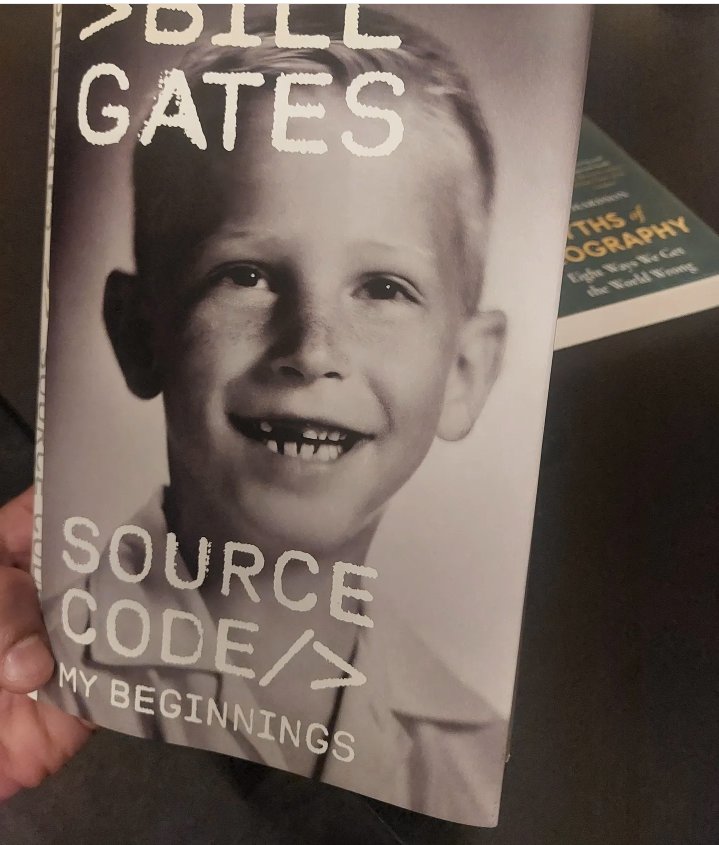
    The curious case of one Mr.Bill Gates

    Few public figure’s image has changed more dramatically in my lifetime than Bill Gates’. When I was a kid in the ‘90s, Gates was the almost cartoon stereotype version of a big bad capitalist.

    He was a ruthless tech mogul, notorious for aggressive business tactics, steamrolling competitors, and building an inescapable Windows empire where you HAD to use Internet Explorer. As Microsoft fought the Justice Department’s massive antitrust case, they became the poster child for cutthroat capitalism with Bill Gates as villain-in-chief.

    Fast forward to today and he is the button-down sweater wearing grandpa championing global health and saving the world’s children with malaria nets and early childhood vaccines.

    Between these two caricatures lies the real man—a flesh-and-blood person. A person old enough to look back, reflect on his past, and understand the impact of his choices.

    That person wrote Source Code.

    The Beginning and the End: Where Bill tells stories he clearly enjoys more than I did

    I think the first part is ok, but boring (for me). A trip down memory lane of growing up in an reasonably affluent family in post-world war America. The wise old grandma, the lawyer dad, the driven mom, the postcard-from-the-1950’s social life. This nostalgia section was breezy and easy to read but that’s about it.

    I might as well tell you that I didn’t take much from the last third of this book either. He’s a smart, driven 19-20 year old who has started Micro-soft (soon changed to Microsoft) with his buddy from high school, Paul Allen. He’s left Harvard. He sounds like he was a pain in the ass and he has the absolutely correct and visionary idea that software for computers, especially computers that everyone will use personally, is the future. Computers were going to be more than the giant hulking machines used in fancy labs and universities and companies. And he (i.e., Microsoft) was going to build software for it. A very far-reaching thought. It’s amazing to see with hindsight how correct he was and how he made the right bets. But not only did he make the right bet, he also executed. Because that matters. Lots of other companies were making bets on personal computers in the early 1970s – the three biggest personal computers of that time were made by Commodore, Apple, and RadioShack’s. We only know about one of those today. .

    They let kids do what in the 1960’s?


    But the middle part is incredibly interesting. This is where you see all the unique experiences that he got to have that melded with the smart, driven personality that was Bill Gates.

    I’m not sure whether something like that would even be possible today. Maybe it’s a testament to the way kids were treated both by parents and by schools and adults in the 1960s. Maybe it’s just his parents and the particular school he went to.

    In this section, an intelligent, precocious kid gets sent to a private school that, in the late 1960s, has access to a computer. And there is a group of computer nerds that get together and learn all about computers. They learn to code.

    At 13, Gates was already working on testing a set of computers and software for a new venture called C-Cubed that was started by one of the ladies who used to drive them to school as part of the parent carpool. Imagine starting a company today and asking a 13-year-old and his school buddies to come by and help you stress test the technology.

    By 15, this group of nerds (the Lakeside Programming Group – named so that they sound professional but really just the name of their high school, Lakeside) secured a contract to develop a payroll system for a company in Oregon. Gates would sneak out at night to program at the University of Washington lab. That is, go to bed, then sneak out of the window, take the night bus to the university and go work in the computer lab. At 15.

    When the software program they were writing for the Oregon company was ready, they took the bus down to Portland in order to submit their software. The company welcomed them, they presented the software, they spent the day meeting with executives of the company and even got taken out to lunch at a fancy place. Imagine a company treating a bunch of 15-year-olds that way. Crazy!

    The same group was hired by the school to create software to figure out class scheduling for the school. The kids like Bill Gates working on this were “For the next month and a half, we worked in the labs, nights and after school, and on weekends, banging out our program.” Imagine your parents and your teachers allowing you to do that.

    The ability to really just hyper-focus and be almost maniacal about coding and programming and solving problems is what really sets him apart. There are no secrets here to his personal success other than a high intellect and ability to work to a manic degree.

    When Time and Place conspire

    Behind the billionaire, behind the tech villain, behind the humanitarian, there was just a kid who found the one thing he loved and pursued it with relentless intensity. But what’s equally striking is how the world seemed to conspire in his favor—from parents who supported his unusual obsession, to a school that provided rare access to computers, to companies willing to trust teenagers with serious work.

    His extraordinary talent met extraordinary opportunities through an ecosystem that nurtured his passion rather than constraining it. Perhaps that’s the dual secret to his success: not just the uncommon dedication to push far beyond where most of us would stop, but also the remarkable fortune to exist in a time and place that allowed a computer-obsessed teenager to flourish in ways that might be impossible today.

  • The story of a killing

    The story of a killing

    Wikimedia Commons

    Six assassins set out to kill the crown prince of the colonial power that had subjugated their land. 

    Their plan: Assassinate him when he is visiting the capital city of the occupied land. Helpfully, the crown prince has decided to have a procession through the city upon arriving. The assassins line the route of the procession, a road running alongside the river. The assassins are among the huge  crowds that have turned up, armed with guns and bombs. Six chances to kill the prince.

    As the prince moves past the first and second would-be assassins, they do not act. Maybe it was nerves? Maybe there was too much of a crowd for them to get close enough to the open top car where the crown prince is travelling. 

    The car approaches the third assassin. He throws a bomb, but it bounces off the car of the crown prince and lands in front of the car behind them in the procession, and explodes. Several people in the car behind the crown prince are seriously hurt. Mayhem. But the crown prince is fine and his car and the rest of the procession zoom off in a hurry. 

    The unsuccessful third assassin swallows a cyanide pill and jumps into the river nearby. The cyanide pill doesn’t work and a scorching summer has meant that the river is only 13 cm deep. He neither dies nor drowns. Caught by the crowds, he is beaten and handed over to the police. 

    The rest of the assassins melt into the crowd. The fourth assassin moves to a food shop on a side road of the riverside road. Rumor says he went for a sandwich but this is likely a myth.

    The crown prince is safe at the town hall but he insists on going to the hospital to see the wounded. Concerns are raised about his safety, but the Governor dismisses them, saying, ‘Do you think this city is full of assassins?’”

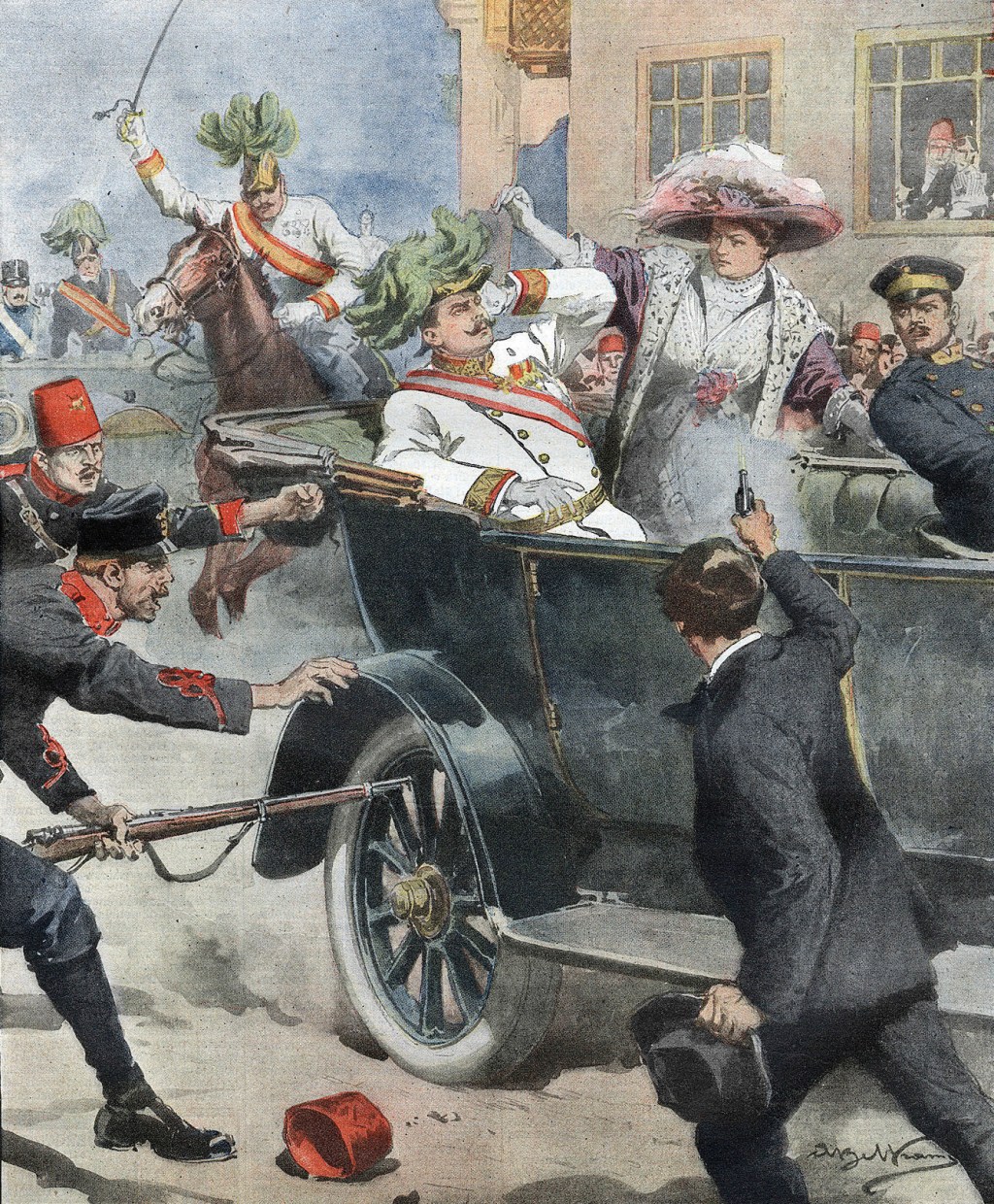
    A procession of three cars heads back down the riverside road to the hospital. The crown prince is in the third car. At a certain point, the driver takes a wrong turn but the head of security who is riding with the prince knows this is not the path they had decided to take. He yells at the driver to stop and go back. The driver stops, tries to reverse, and the car stalls. In front of a food shop. 

    A disappointed man who came to kill the crown prince can’t believe what he sees. The crown prince is sitting in a stalled car in front of him. He runs, cocks his gun and shoots him dead. 

Twenty Twenty-Five

Blog at WordPress.com.